
How a brain resilience switch is reshaping ideas about mental illness treatment

Four decades of research into how stress, drugs, and life experiences shape the brain are transforming the way scientists think about mental health. Instead of focusing only on what goes wrong in conditions like depression and addiction, researchers are increasingly asking why some people remain stable and recover, even after severe adversity.
In a recent Genomic Press interview in Brain Medicine, neuroscientist Dr. Eric J. Nestler reflects on this shift and on his own role in building the field of molecular psychiatry. His work has helped uncover the biological “switches” that allow experiences to leave lasting marks on mood, motivation, and resilience.
From basement experiments to molecular psychiatry
Dr. Nestler traces his scientific path back to his childhood home in Nassau County on Long Island, New York. With guidance from his father, a high school biology teacher, he set up a makeshift laboratory in the family basement. There he learned how to design experiments, interpret results, and turn curiosity into concrete projects that later won science fair awards.
This early start helped launch a long academic journey at Yale University, where he completed his BA, PhD, and MD degrees. At Yale he trained in the laboratory of Nobel laureate Paul Greengard, studying how brain cells communicate through protein signaling. What began as basic chemistry soon evolved into a search for the molecular foundations of behavior and mental illness.
When he later established his own research group at Yale School of Medicine, he deliberately chose the name “Laboratory of Molecular Psychiatry”. At that time, applying molecular biology to psychiatric questions was still unconventional. Together with colleague Dr. Ron Duman, he argued that understanding mental illness would require digging down to genes, proteins, and brain circuits, not just symptoms and psychology.
His approach quickly gained traction. Within a few years, he became the founding director of Yale’s Division of Molecular Psychiatry, a position made possible when then-director Dr. George Heninger voluntarily stepped aside. Nestler often cites this as a defining act of mentorship and generosity—values he has tried to pass on to younger scientists.
A lasting protein that helps explain addiction and stress
One of the most influential findings from Nestler’s work centers on a protein called ΔFosB, a transcription factor that regulates gene activity. His team discovered that ΔFosB builds up in key reward regions of the brain after repeated drug exposure or chronic stress.
Unlike most proteins, which are broken down relatively quickly, ΔFosB is unusually stable and can persist for weeks or months. This extended lifespan allows it to change patterns of gene expression in affected neurons for a long time after the original trigger has passed.
For addiction and stress-related disorders, this provides a powerful biological explanation: even short periods of drug use or stress can leave long-lasting imprints on the brain’s reward and mood circuits. Today, ΔFosB is widely recognized as a major driver of vulnerability to addiction and a critical link between experience and enduring behavioral change.
The Genomic Press interview uses this discovery as a key example of how molecular insights can reshape larger theories of mental health. By understanding how proteins like ΔFosB reprogram brain circuits, scientists can begin to imagine treatments that directly target these long-lived changes.
From signaling cascades to single cells
Over roughly forty years, Nestler’s research has followed—and often driven—the major technological shifts in neuroscience. His early studies focused on intracellular signaling pathways: the chemical routes through which cells respond to neurotransmitters and hormones.
As tools improved, his work expanded to the level of transcription factors and gene networks, asking how clusters of genes cooperate to influence behavior in specific brain regions. About twenty years ago, his lab moved into epigenetics, examining how changes to chromatin structure—such as chemical tags on DNA and histone proteins—allow environmental experiences to leave durable marks on brain function.
More recently, ultra-sensitive methods have enabled analyses at the level of distinct cell types and even individual neurons. Single-cell studies now reveal that not all cells in a given brain region respond to stress or drugs in the same way. Some cell populations show profound alterations, while neighboring cells remain relatively unaffected.
These advances raise a crucial question for future treatment: could therapies be designed to target only the specific neuron subtypes that drive symptoms in a particular person, leaving the rest of the brain’s circuitry untouched? While this vision remains in development, it points toward increasingly personalized approaches to mental health.
Shifting focus: from damage to resilience
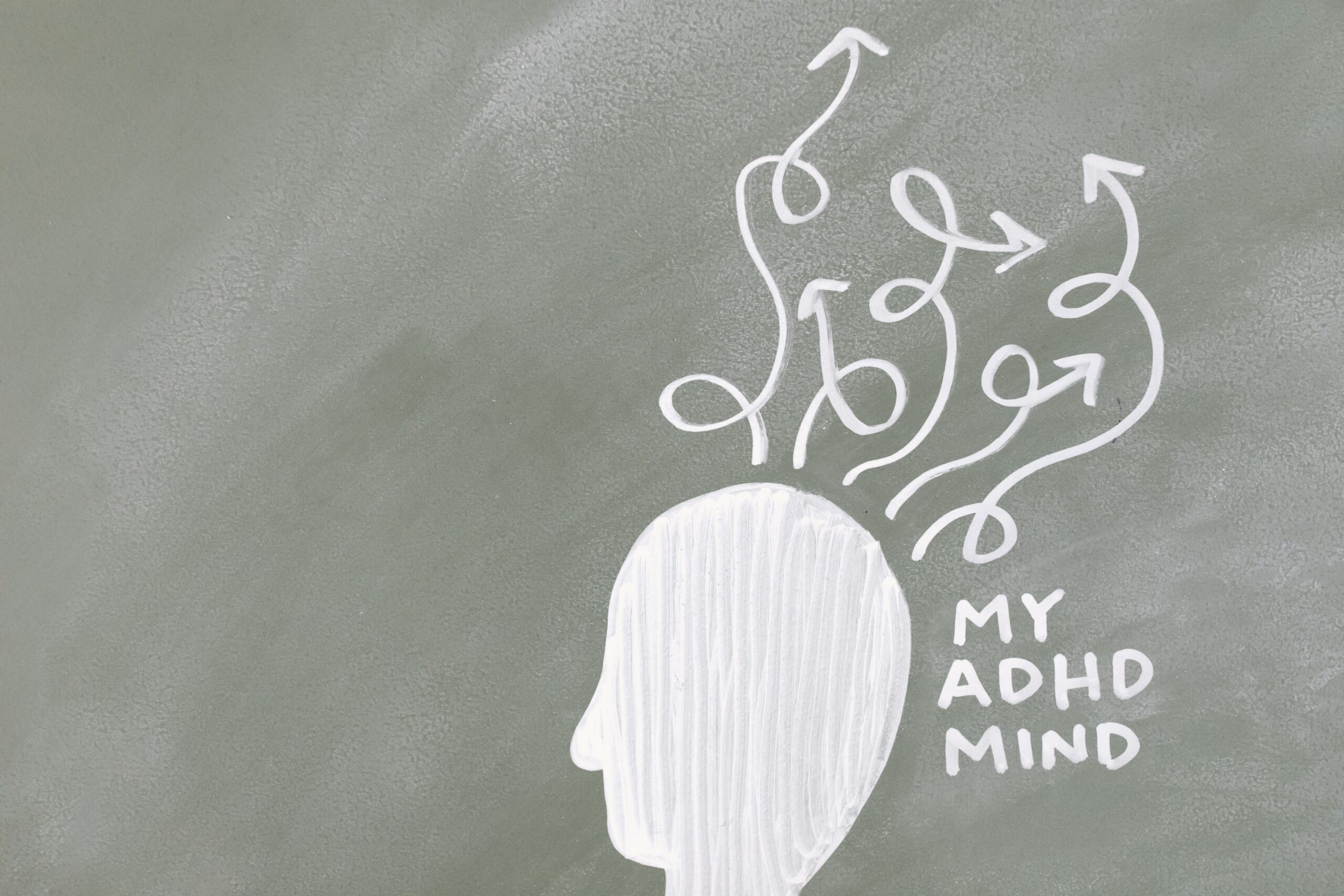
A distinctive feature of Nestler’s program has been its emphasis on resilience. Rather than only modeling and dissecting vulnerability—what makes some individuals more likely to develop depression or addiction—his lab has also looked closely at those who withstand stress.
In animal models exposed to chronic stress or drugs, his team identified molecular, cellular, and circuit characteristics that distinguish resilient animals from more susceptible ones. Resilient animals often show active protective mechanisms—adaptive changes in brain pathways—that simply never emerge in vulnerable counterparts.
This reframing has practical consequences. Instead of focusing exclusively on reversing damage caused by stress or drugs, it suggests that treatments could be designed to bolster the brain’s own resilience pathways. People who are more susceptible might then be helped by therapies that mimic or enhance the biological traits of naturally resilient individuals.
According to the interview, several resilience-inspired strategies are now being evaluated in clinical trials for depression, illustrating how basic neuroscience can eventually feed into new therapeutic options. If successful, such approaches could help reorient psychiatry toward strengthening patients’ innate defenses, not only repairing what has gone wrong.
From lab animals to human brains
For any animal research to influence medicine, its findings must correspond to what happens in people. Nestler’s work has met this test in important ways. Key observations from rodent models of addiction and stress-related disorders have been supported by studies of human brain tissue obtained after death from individuals with these conditions.
This cross-species alignment strengthens confidence that the mechanisms uncovered in the laboratory—including changes in transcription factors, epigenetic marks, and circuit activity—are relevant to human mental illness. It also underscores the value of combining animal models, human tissue studies, and clinical research to build a coherent picture of disease mechanisms.
Over the course of his career, Nestler has published more than 800 scientific papers and major textbooks on the neurobiology of mental illness and molecular neuropharmacology. His work has attracted well over 100,000 citations, and his h-index places him among the most widely referenced scientists in the world.
Protecting science from political pressure
Despite these advances, Nestler expresses deep concern about the future of scientific research. In the interview, he warns about the growing risk of science becoming entangled in partisan politics. Illness, he argues, does not respect political boundaries: people in different regions and of different beliefs suffer from the same psychiatric conditions and need the same evidence-based care.
He stresses that preserving scientific independence is essential if research is to serve the public good. Organizations like Genomic Press, which prioritize open access and broad dissemination of new findings, align with this goal by making cutting-edge medical science available to researchers and clinicians worldwide.
Mentorship, family, and a life in the arena
Beyond his laboratory achievements, Nestler emphasizes the roles of family, mentorship, and service. He speaks warmly of his wife of many decades, their three children, and their growing group of grandchildren. He describes himself as hardworking and organized, striving to balance discipline with a commitment to generosity and fairness.
Although he has received numerous honors—including major awards from professional societies, election to the National Academy of Sciences and the National Academy of Medicine, and honorary doctorates—he cites the accomplishments of his former trainees as his greatest source of pride.
His guiding philosophy, he notes, comes from Theodore Roosevelt’s famous tribute to “the man who is actually in the arena”—the person who accepts risk, effort, and criticism in pursuit of meaningful work. For nearly forty years, Nestler has remained in that arena, helping to redefine how we understand the brain’s response to adversity and offering new routes toward more effective, resilience-focused treatments for mental illness.



0 comments